Thursday, 25 November 2010

EPPING FOREST GOLD


Autumn is my favourite season on account of all the dramatic golds and burgundies falling out of the skies, the crisp early morning sun and the gradually increasing chill-factor in the air. You just know the long winter dark night of the soul is imminent and the urge to enjoy every last glimpse of sunshine becomes paramount.  

I usually like to go for a least one really good walk at this time of year to admire the changing of the seasons, whether it be Kew Gardens, Hyde Park or in this case the scenic Epping Forest, occupying a 12-mile stretch between north east London and the county of Essex. 

The forest was reportedly used for hunting in Tudor times, that old rake Henry VIII building a great, heavy beamed hunting lodge still extant today on the forest's southern edge. Above is an atmospheric little churchyard in Buckhurst Hill, just east of the parkland and below are some fine examples of the awe-inspiring beauty to be found in Epping, its temporary nature only making it all the more poignant...


 A ha! Civilisation at last!

Wednesday, 24 November 2010

LONDON'S BEAUTIFUL INDEPENDENT SHOPS


London has some really fabulous, eccentric little independent shops, generally located in the more bourgeois parts of town like my beloved old 'hood of Kensington or the hipster Dickensian back alleys of Shoreditch. Some of these quirky outlets have been decorated with such attention to period detail they almost look like a film set, and really contribute to the charming ambience of London's streets. 

Lacquer Chest Too (above), a quaint little antiques emporium on Kensington Church Street was established in 1951 and 'started out selling objects nobody else sold - and still do'. The shop offers a side business in prop hire consisting of a veritable cornucopia of wares covering five floors available for film and photography shoots. Their window features quality, authentic items such as these 19th c ebony dominoes below, displayed with beautiful handmade tags and a loving care distinctly lacking from your local high street.   


John and Jessie's bespoke florist - also on the Kensington Church Street - has a tiny premises but what it lacks in size it makes up for in atmosphere on its inviting shop floor. The interiors burst with stunning orange birds of paradise and bright hydrangeas in rich magenta and delicate lilac hues, all set off with a beautiful vintage wallpaper background (below). The florist's clean black and gold shop front oozes smart London charm, perfectly complementing the cute cafe next door's retro outdoor tables.


Probably my favourite London shop though has got to be the delectable Ottolenghi on Holland Street. One of a chain of four outlets (Notting Hill, Islington and Belgravia being their other upmarket locations), the shop offers a mouthwatering selection of indulgent treats, both savoury and sweet, as well as a range of bespoke gourmet breads and other goodies. The shop window features vintage platters of unusual, pretty cakes such as the lemon, polenta & pistachio friands and succulent handmade coffee or raspberry meringues (below). Ottolenghi always does a cracking Saturday trade, Kensington's poshest residents dropping by for their weekend brunch orders, nervy pugs in tow and enormous Range Rovers illegally parked outside. A constant stream of European tourists and fatwacs stop by too, faces pressed hard against the window, salivating at the gorgeous sweetmeats whilst recoiling in horror at the prices. Quality is expensive, of course, and in this instance it is 100% worth the price!  View Ottolenghi's delicious blog here.


Finally, a little pic of the gorgeous Ann's light shop (below), whose shopfront is always packed with cosy, glowing lamps and vintage light fittings. The shop forms part of a spectacular and much larger historical building (though I'm not certain what period) which gently follows the curve of Kensington Church Street as it snakes its way up towards Notting Hill.  


Tuesday, 23 November 2010

LANVIN POUR H&M


Today sees the onslaught of another insane frenzy of consumerist credit card abuse with hoards of feverish ladies descending on H&M stores to purchase pieces from Lanvin's new diffusion range.

The Swedish fashion retailer has become renowned for collaborations with both high-end designers and celebrities, starting with Chanel's funny little designer dandy Karl Lagerfeld in 2004. Partnerships with labels such as Viktor & Rolf and Stella McCartney as well as celebrands like Madonna and Kylie Minogue followed, affording the aspirational high street girl access to the illusion of an unattainable designer lifestyle marketed towards her ad nauseum. Feeling insecure yet girls?


The collection incorporates some trademark Lanvin staple looks such as the flirty, frilled dresses in bold block colours (above) displaying a nostalgic nod to the 80s, while not straying too far from the traditional high-end Lanvin brand image (above top). Some menswear pieces are included in the range as well, but like...who cares? 

Another way for mere mortals to live the Lanvin dream is via this sumptuous coffee table hard-back extravagaza (below). The book details the history of Jeanne Lanvin's brand from its 1909 couture beginnings through the development of the Lanvin design house encompassing home decor, menswear, lingerie, furs and even its own dye factory. The imagery is lavish and vintage, the text covering the full Lanvin history right up until the current reign under Morroccan-born artistic director Alber Elbaz. 


Lanvin are perhaps best known however, for their 1927 signature scent Arpege (below). This beautiful fragrance - still available today - was allegedly created by Jeanne Lanvin for her daughter's 13th birthday (how chic), the name referencing the term 'arpeggio' and inspired by her love of music. The classic noir bottle features a modernist design, symbolic of a mother and daughter's preparation before a grand ball. If Austerity Britain means you can't stretch to a piece of H&M's Lanvin range, the least you can do is shoplift, I mean, go crazy with the Arpege tester next time you're in Boots. You're worth it (especially if L'Oreal tell you so).

All images courtesy of Google

Monday, 22 November 2010

THE THIN HOUSE, SHEPHERDS BUSH

Property is such an emotive subject in London and the remarkable 'Thin House' (a converted milliner's shop) in Shepherd's Bush (exterior shot below) caused controversy last year when it appeared on the market with an asking price of around £550,000. The situation seemed indicative of the insanity of London property prices when you consider the house measured only  5'5" wide at some points - a feature enterprising real estate agents marketed as the house's charming 'unique selling point'.


In fairness, the property's beautifully renovated interiors (below) and Zone 2 location may have warranted the half-million plus price tag, its two bedrooms and 1000sq footage spread over five levels. However, its esoteric design offers limited appeal to families with children, lazy so-and-sos with an aversion to stairs and claustrophobes, who most certainly, need not apply. Instead, The Thin House has 'media professional' or 'young internet entrepeneur' stamped all over it...the trendy bastards.


The architects have, of course, fully utilised the long narrow space to maximum effect, with stylish wooden built-in futons and compact, slim bookcases lining the distinctive property's numerous hallways (below). In a city where space is at an absolute premium, its interesting to note that even smaller premises comprise a niche sector of London's property market - an uninhabitable 11ft 3in x 7ft 3in former cleaner's cupboard in Chelsea valued at £170k plus around £30k to make it livable - hitting the headlines last year also.


These kinds of stories might be mildly entertaining for tourists or simply bewildering for Britons living outside London's boroughs. Things hold a little more gravity however, if you're an average wage earner residing in the city and attempting to gain a foothold on a beastly property ladder you know remains out of bounds. Even a hefty deposit provides no guarantee of success in a situation where banks simply refuse to lend. And when the average worker can no longer afford to live in their native city, the concept of emigration becomes an increasingly viable option. The question remains, what do our fine city's powerful men - those 'masters of the universe' Bullingdon Club alumni care?

All images courtesy of the interweb

Wednesday, 17 November 2010

A PRETTY GREEN LIAM GALLAGHER

It seems Carnaby Street is the place middle-aged rock'n'roll stars go to reinvent themselves, specifically Liam Gallagher in the form of post-Oasis men's clothing venture 'Pretty Green'. The Old Burnage Bully is tastefully spreadeagled over his new shop window, manfully draped in a vintage union flag that puts Morrissey's notorious 1992 Finsbury Park performance to shame (below). That trademark intimidating scowl burns holes into the skulls of innocent Japanese tourists, Gallagher's pretty vacant looks and celebrity bankability making a potent combination. Kerching!


Apparently 'founded and designed' by Gallagher himself, (difficult to imagine the moody so-and-so fingering fabric swatches and frantically sketching all night on a massive, Lagerfeld-style creative bender), the store capitalises on both Oasis' characteristically British brand of football casual/mod fusion style and the rich cultural, music and fashion legacy of London's famous Carnaby Street. With a logo ripped straight off the Beatles' distinctive 1965 Rubber Soul album cover, its interesting to ponder if the store's name is a sly nod not only to Weller but also towards all those pretty green dollar bills hes going to rake in with this new incarnation...


Pretty Green's wares incorporate swinging '60s and mod-influenced 'Black Label' tailored designs, including a range of parkas priced from £420 to £555. The more casual 'Green Label' diffusion line features less expensive pieces in rich burgundy, blue, purple and green hues. The reasonably priced desert boot at £95 in distinctive champagne and green is pretty cool, along with the brilliant black suede Lennon hat artfully modelled by the man himself. La Gallagher's regular pounding of Hamsptead Heath's paths (keeping an eagle eye out for Georgie Michael!) in early morning mists have paid off, his youthfully buff form showcased in all its frowny glory on the store's website.

Brother Paul Gallagher, Ocean Colour Scene's Steve Craddock and ex Ride shoegazer/Oasis band mate Andy Bell have all made in-store DJ appearances (presumably Noel's invite got lost in the post). The shop also functions as a venue showcasing exclusive new material and events for Liam's post-Oasis musical outfit Beady Eye. Could it be Liam's been reading the Katie Price guide to branding and business diversification? Definitely maybe.


Sunday, 24 October 2010

WHOSE COAT IS THAT JACKET YOU'RE WEARING?

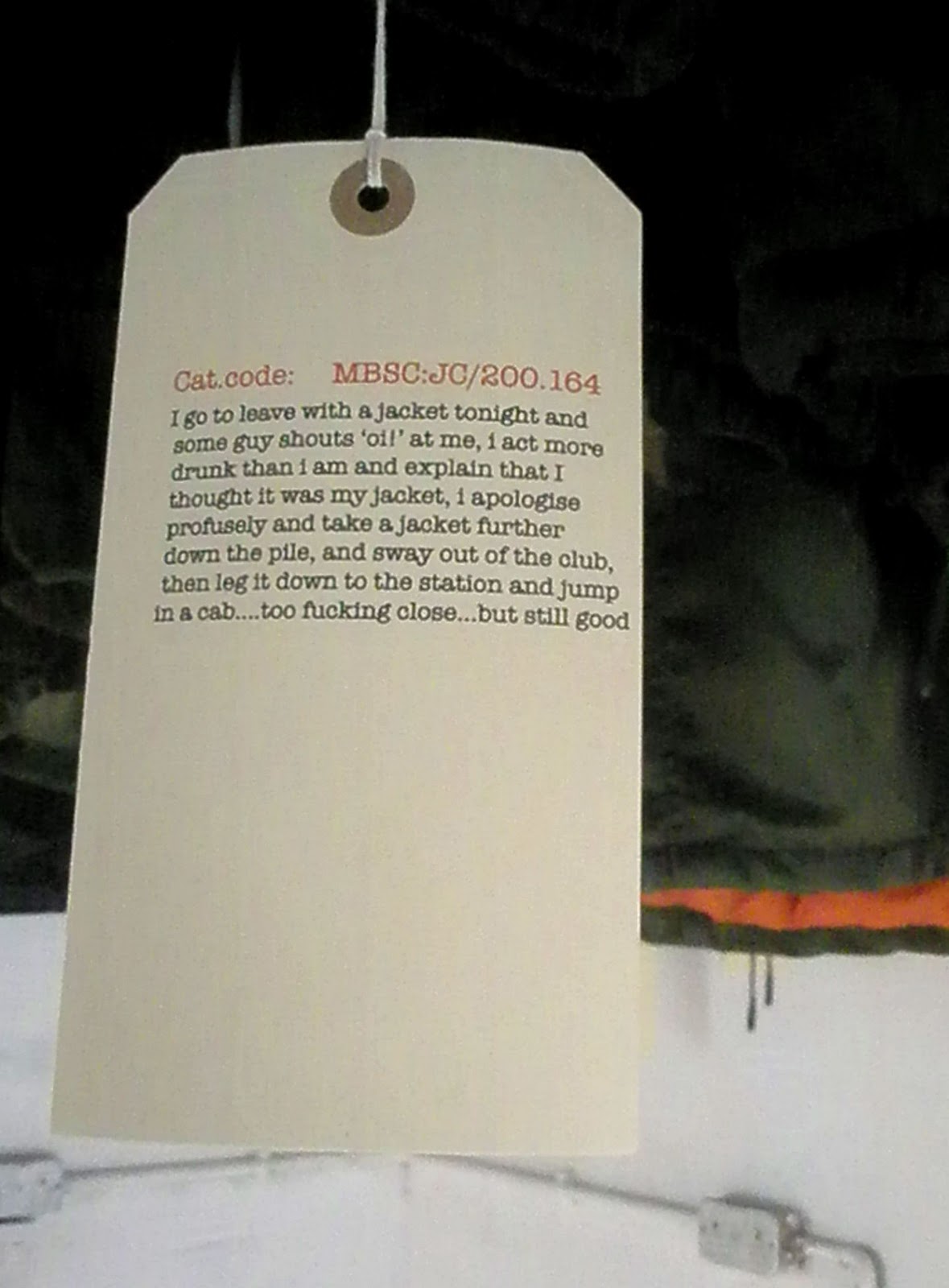
In my experience, the Welsh are generally pretty cool. The seminal Manic Street Preachers can't be wrong (4 REAL Richey!), and renegade artist Mike Ballard is no exception. Ballard's current London show 'Whose Coat Is That Jacket You're Wearing?' is on this October in a temporary exhibition space (an old tailor's shop, aptly) in Euston.


The show comprises hundreds of coats suspended from the ceiling, stolen by Ballard over a decade from London pubs and clubs (below). Upon his arrival in London from a small village in North Wales, the artist's own precious coat was stolen. His twisted punishment for the city that broke his illusions seems to have manifested itself in a compulsion to rack other peoples' coats. The pungent stench of stale fags, spilt beer and acrid sweat engulfs the visitor on arrival, adding an air of putrid authenticity to proceedings.  Each coat is labelled with a witty anecdote about its liberation or the artist's existential opinions on London life (above). Ballard's small-town musings on the big-city experience reflect his own relocation from a North Wales village to London, a journey so common to our fair city's endless multitude of foreign inhabitants. The originality and inherent humour of Ballard's show was intriguing, as was the patently absurd, fundamental stoopidity of the project. The irony remains that he didn't actually steal any of the coats' contents, instead cataloguing and photographing the items as part of the exhibition. What a waster...  


Friday, 22 October 2010

PART 2 OF A RIDICULOUSLY LONG POST ABOUT THE ISLE OF WIGHT...WEST COAST

The Isle of Wight's beautiful west coast has the natural benefit of slow, dreamy sunsets descending gradually across the horizon and a more gentile, sophisticated appearance than some of the chavvier eastside towns (not mentioning any names, Sandown). The island's westerly tip features a dramatic coastal walk from the village of Freshwater ascending a gentle green hill, alongside stunning alabaster-white cliffs. A healthy batch of Super Furry Animals populated the hillside, delightfully placid toward the constant stream of huffing n puffing ramblers and fatwacs* invading their peaceful home (below).   


Upon the crest of the hill stood an imposing Celtic cross - an 1897 monument to Poet Laureate Lord Alfred Tennyson who made the island his home in 1853, until his death in 1892. This beautiful cross (below) dominates the landscape, an ominous talisman warding off the evil lurking within the foreboding, smoke-coloured skies above. Eventually the heavens opened, the mini tempest rolling over the westerly Freshwater Bay as rapidly as it had arrived.


The pretty coastal walk continued along an increasingly narrow peninsula towards the stunning outcrop of rock formations known as The Needles (below). This beautiful vista appeared island-wide on heavy rotation  across all postcard shops and deservedly so. The view was truly divine, its pure white cliffs and aquamarine water seeming somehow more Aegean Sea than Rule Britannia... 


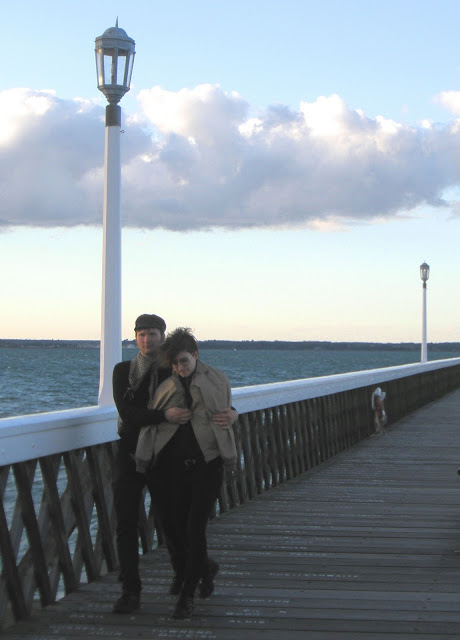
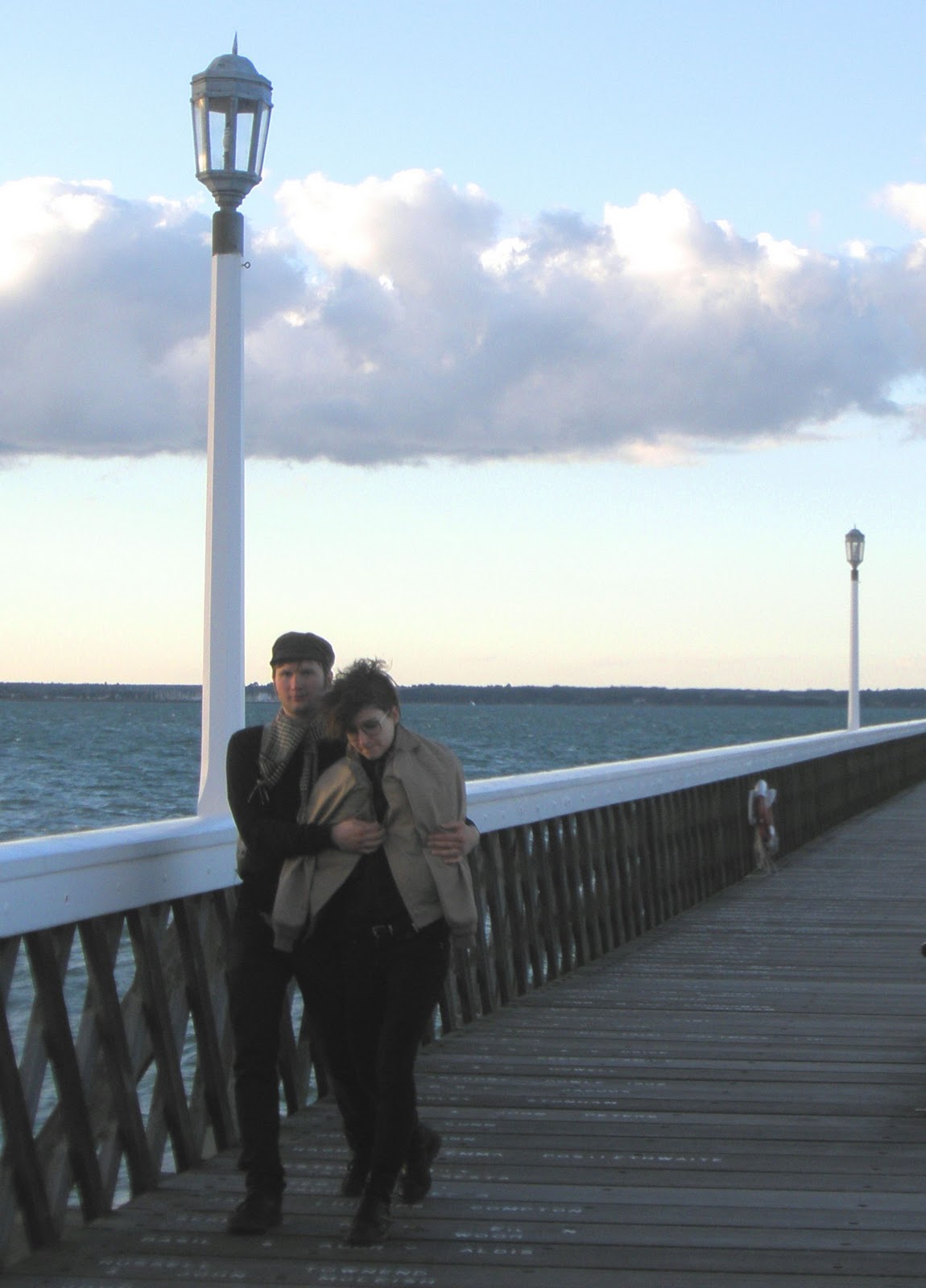
My jaunt around the Isle of Wight's westerly nether regions concluded with a browse around the petit bougeois harbour town of Yarmouth, the island's alternative ferry port to the fatherland. The seafront housed a rickety wooden pier, atmospheric under the dwindling pink dusk light and decorated with retro life-raft donuts (good enuff to eat! - below) and a handsome, post-ironic mod couple cuddling up against the breeze, showing off their minimalist, hipster, 21st century styling. Sartorialist...eat your heart out...(below bottom).


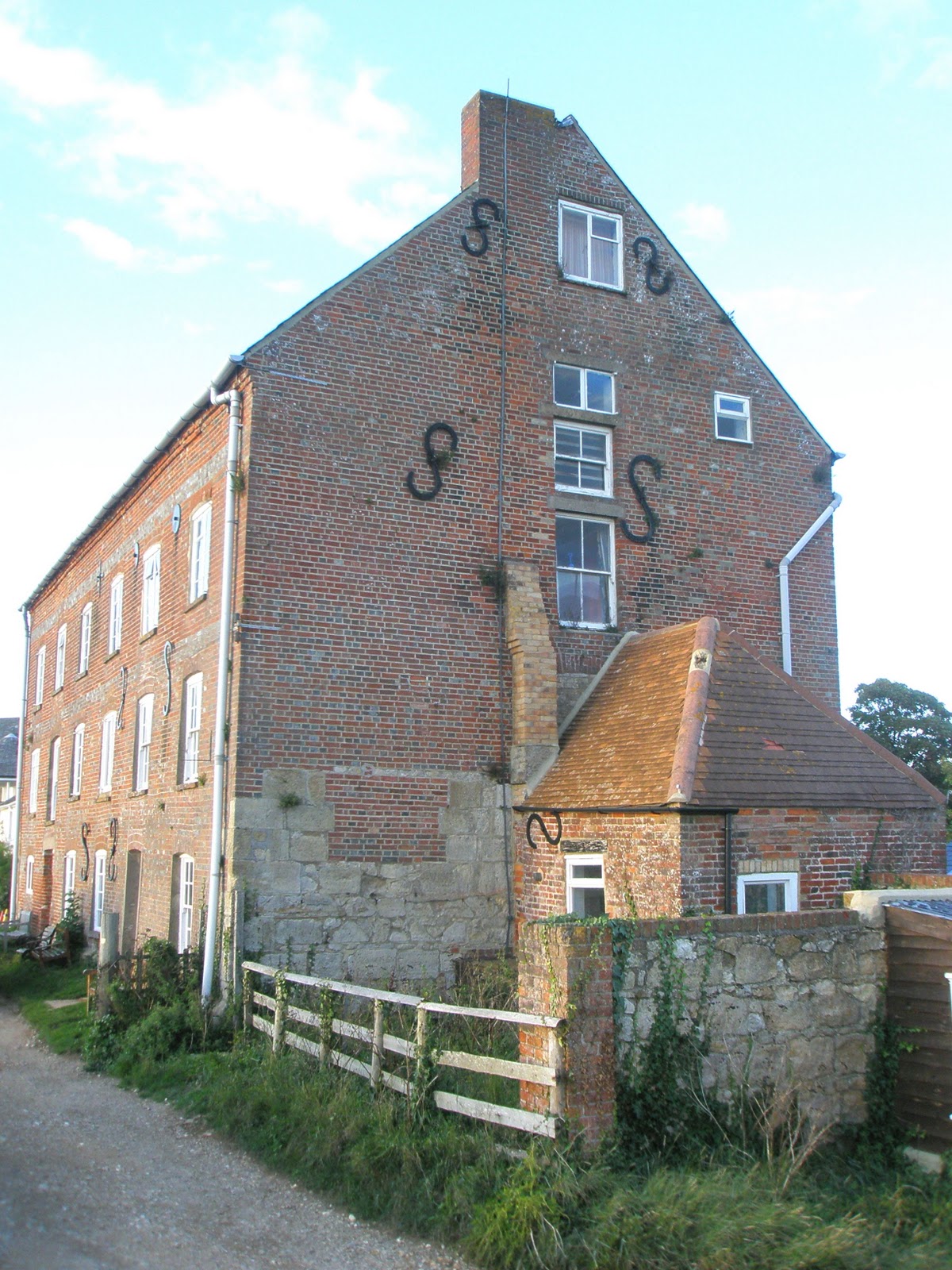
Like any pretty English village worth its salt, Yarmouth's sleepy main drag was populated with historic buildings and picturesque architecture. Cosy cottages bursting with colourful foliage, enormous barns converted into living quarters of extended bourgeois families and normal two up-two downs surrounded by fields drenched in afternoon sun (below) all contributed to the town's pleasant atmosphere. An Englishman's home is his castle, its just a shame he probably can't afford one here. Rah rah rah! We're going to smash the oiks!

A slow-burning sunset fading low over clattering yacht masts set the scene for my last glimpse of the charming Isle of Wight (bottom). The weather was great, the people welcoming and the beaches sandy...if you close your eyes you would almost believe you were not even standing on Old Albion's fine shores. Then you hear the familiar drone of a Vespa engine...and get the hell out of Sir Weller's way! Now...thats entertainment.  


* fatwac - Fat American Tourist With A Camera (c) The Artist Formerly Known As Jaybs 2007

Sunday, 17 October 2010

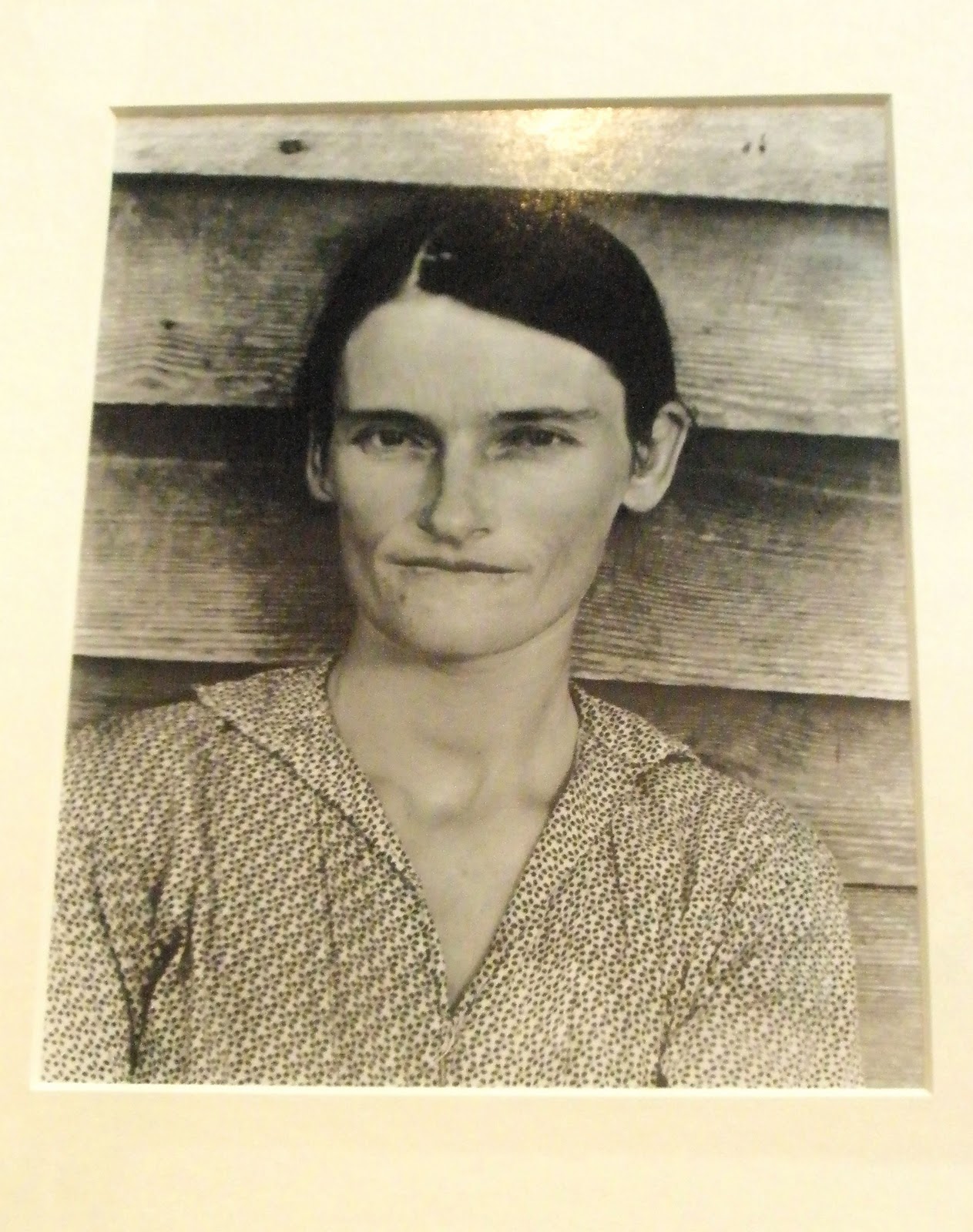
WALKER EVANS AT THE HIGHGATE SOCIETY

Seminal American Depression-era photographer Walker Evans' work currently features in a small show at The Highgate Society, a humble community hall in north London's most atmospheric village (below). The building resonates with civic charm, its dusty pink interior walls dotted with a royal Victorian coat of arms, along with marble busts of (presumably) local people of note. (below bottom).


Evans' haunting, sepia-toned images depict the dead-eyed reality of the grinding rural poverty, desolation and hopelessness characteristic of the mid-1930s American mid west. The photographer's work emanates a stark, dignified sympathy towards his subjects, while remaining unmistakably political within a subtle, almost stoic aesthetic framework. Certainly, the irony must not be lost on The Highgate Society's curators in featuring such emotive photographs of hardship and despair in one of London's most affluent boroughs during these times of modern financial armageddon. We may not be eating out of dustbins just yet but lets hope when our time comes we all appear as photogenic as Evans' 1930s models.