Showing posts with label literature. Show all posts

Wednesday, 1 September 2010

LOCK UP YOUR DAUGHTERS...ITS WHITBY


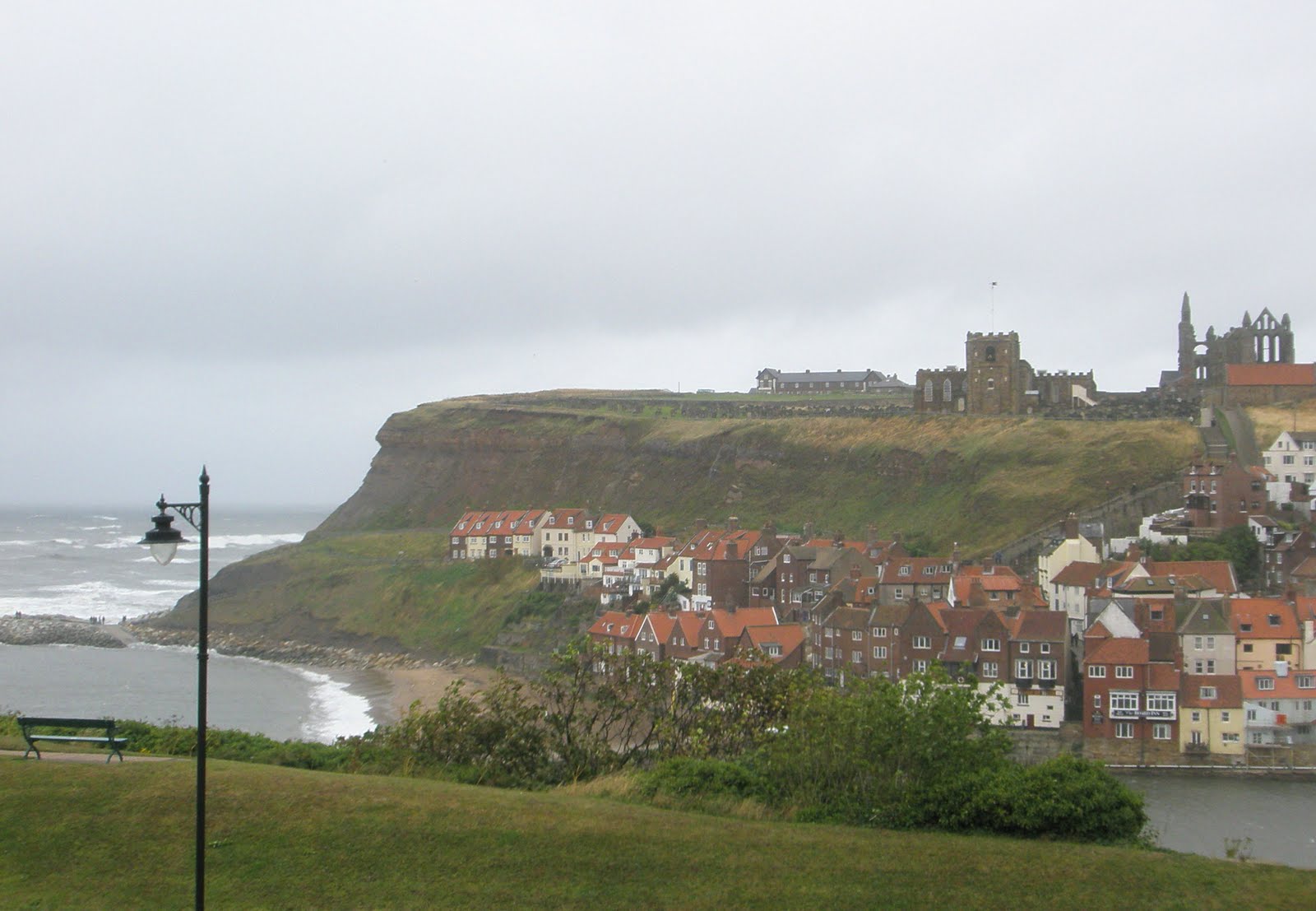
Ever since I read Bram Stoker's 1897 novel 'Dracula' I had wanted to visit the pretty North Yorkshire seaside town of Whitby. The small fishing port - romantically positioned between a sometimes tragic North Sea (a teenager drowning off Whitby's cruel waters the week after my departure) and the Brontesque Yorkshire Dales - features in the book as the eerie village in which the dastardly Count sucks the life out of poor Lucy Westenra before jumping the overnight sleeper to King's Cross. Stoker visited the town a number of times, his account of Dracula's dramatic arrival reputed to be based on a real incident in which the ship Demetrius ran aground on Whitby's shore...its gruesome cargo of occupied coffins discovered by the local townsfolk in the first morning light.

The modern Whitby still manages to maintain a romantic atmosphere, the ruined skeleton of its clifftop abbey (below bottom - destroyed by Vikings in 867) dramatically silhouetted high above the harbour. The East Cliff's atmospheric old cemetery and the historic, jagged-roofed fisherman's cottages underneath endow the restless shore with a sense of mystery, danger and a strange other worldliness (below top). 'Romanian gypsy' fortune-teller Lee Esther Alita Lee had set up shop along the main drag (below middle) and thankfully the usual seaside tackiness characteristic of most dreary British seaside towns was kept to a minimum. The old lady was charming, not tacky oirright?


Another of Whitby's many charms (apart from the replica of James Cook's ship Endeavour which almost brought up me breakfast - above) was this fantastic little fully functioning smokehouse (below). A real tourist crowdpleaser, the business still produced many a fine fishy product from authentically smoked fresh salmon to a divine kipper pate, as eaten by crusty old seadawgs. A local hefty chap spent his days shovelling sawdust onto the smokehouse fire, creating the thick black tar dripping from the walls like the devil's viscous oil and posing like a trained monkey for tourist photos and entranced children alike.


In tribute to the town's whaling heritage, Whitby also displayed its nautical history and power by fashioning a curious archway on top of the West Cliff from an enormous whale-bone jaw (below). The original structure was erected around those quaint pre-Greenpeace/Peta times of 1863, the current structure an Alaskan donation dating from 2003. This esoteric little statement again adds to the unique charm and ambience of this delightful seaside town and helps illustrate why Whitby attracted writers, artists and intrepid seafarers of the past as well as goths, folk festival hippies and all manner of tourists alike in the modern age.


Lastly, I just had to add this link for a classic 80s video for one of my dear, dear readers who is a HUGE Mick Hucknall fan (you know who you are...however I will refrain from publically shaming you, 'Ban-Ki Moon')!
The song is Simply Red's melancholy 1986 dirge 'Holding Back the Years', the video shot in Whitby, featuring many scenes of the pretty harbour, abbey and cemetery, as well as a youthful cameo from old Primrose Hill caner Sadie Frost. Enjoy, 'Ban-Ki'...


Wednesday, 24 February 2010

DOSTOEVSKY...ETC

A couple of years ago, I read my first Official Work Of Russian Literature. Crime and Punishment it was, by one Fyodor Dostoevsky. My misspent youth was wasted reading NME articles about Pop Will Eat Itself or the latest friggin' Adidas trainers the hip kids were wearing down the Portobello Road in The Face (Shoreditch wasn't cool back then kids). I had loads to catch up on if I was going to contribute to any bohemian intellectual dinner party conversation.

Evidently, the book was a pain-free experience. Indeed, I loved it. Maybe War and Peace wasn't that fabled nightmare summer reading assignment The Kids had always dreaded? Raskolnikov seemed like the ultimate anti hero with his manically existential wringing of hands and gnashing of teeth over his dastardly murderous deeds. If redemption through suffering was the theme of Dostoevsky's work poor old Raskolnikov seemed to be in for one hell of a philosophical awakening.

In the summer of 2008, I met a 46 year-old flame-headed Westminster gentleman for a blind date in a (mercifully) dimly lit Covent Garden cellar bar. Apart from his abundant nasal hair, nonchalant yarns of policy-making trips to Brussels and polite enquiries into my art-buying practices...the main thing I recall of this curious man was his declaration that Anna Karenina was his favorite book. Not just Official Work of Russian Literature but All-Time Top of the Pops Bog Read.

My ginger Gilbert and George date never made it to round two but I did seek out Tolstoy on the advice of this cultured Svengali. Anna Karenina was even more impressive than Crime and Punishment primarily in the sense that its themes seemed more accessible, relevant and universal. Chaotic sexual passion, infidelity, the pressure of societal expectations and the idealisation of rural life were all passionately played out within the mise-en-scene of pre-Revolutionary Russia, so alien to my own experience and thus, utterly compelling. Anna however - like the classic film noir heroine - must be punished for her sins and meets her bloody end under the 3.49 to Petersburg (or something). Of course, had Tolstoy devised any less dramatic a finale Anna Karenina would not be considered the literary phenomenon it is today. Just once though, wouldn't it be cool if the non-conformist female, the woman of mad and monumental passion, the sexual prey to the patriarchal ruling class did not have to fall off the metaphorical cliff (or literally for Picnic at Hanging Rock's Miranda) in a blaze of tragic glory?
All images courtesy of Google